Video
Relationship between Supplier Quality Management & Audit to ISO 9001 & IATF 16949
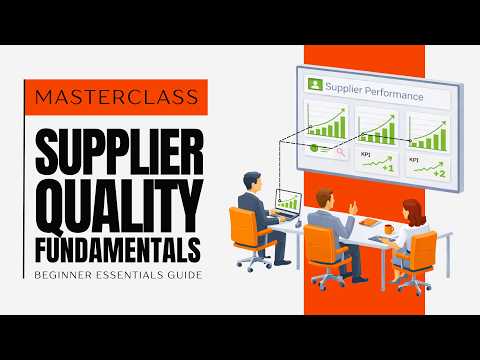
Supplier Quality Management (SQM) & Supplier Quality Audit (SQA) is directly connected to both IATF 16949 & ISO 9001 because both standards require organizations to establish effective control, monitoring, evaluation and development of their suppliers.
Relationship with ISO 9001
ISO 9001 is the global foundation for Quality Management System (QMS). One of its key principles is ensuring that externally provided products, services and processes consistently meet customer and regulatory requirements.
Under ISO 9001, organizations are expected to:
- Evaluate and select suppliers based on their capability
- Monitor supplier performance continuously
- Conduct supplier audits when necessary
- Maintain approved supplier lists
- Control outsourced processes
- Address supplier non-conformities and corrective actions
- Ensure traceability and documented information
In simple terms, SQM is the operational process used to fulfill ISO 9001 supplier control requirements.
Without proper SQM, a company may fail ISO 9001 audits because poor supplier control can lead to:
- Product defects
- Delivery failures
- Customer complaints
- Regulatory non-compliance
Relationship with IATF 16949
IATF 16949 is built in ISO 9001 but adds much stricter automotive industry requirements.
In the automotive sector, SQM becomes far more critical because:
- Automotive supply chains are highly interconnected
- A single defective component can cause recalls or safety risks
- OEM customers demand zero-defect performance
IATF 16949 places emphasis on:
- Supplier Development
- Supplier Risk Management
- Second-party audits
- Supplier scorecards and KPI monitoring
- PPAP (Production Part Approval Process)
- APQP (Advanced Product Quality Planning)
- Supplier Corrective Actions (SCAR)
- Traceability and Change Management
- Continuous Supplier Performance Improvement
Supplier audits under IATF 16949 are therefore more structured, technical and Risk-Based compared to standard ISO 9001 audits.
How Supplier Audits Both Standards
SQA help organizations:
- Verify Supplier compliance
- Reduce Quality risks
- Improve supplier consistency
- Ensure customer requirements are met
- Identify process weakness early
- Strengthen supply chain resilience
Today, many companies are evolving from periodic supplier audits towards:
- Real time supplier monitoring
- AI-driven Risk prediction
- ESG compliance tracking
- Digital Supplier Dashboards
- Supplier Quality 4.0 systems
These modern appraches strongly support the risk-based thinking nd continuous improvement requirements found in both ISO9001 ans IATF 16949.

Conclusion
SQM & SQA acts as a core operational pillar supporting both:
- ISO 9001 for general Quality Management compliance and
- IATF 16949 for advanced automotive supply chain Quality Assurance
As industries move toward AI-driven Quality Systems and digital supply chains, SQM is becoming one of the most strategic functions for achieving certification success, customer confidence and long-term operational resilience.
Supplier Quality Management & Audit
ISO9001 QMS Consultancy
The Illusion of AI Taking Over Jobs
China's Linkerbot aims for $6 billion valuation
What is GD&T?
Root Cause Analysis